Wednesday, October 04, 2006


4 I like coffee

I like coffee – at least two cups a day – prepared in a Bialti Brikka Espresso Maker, and sometimes by placing a simple filter on the cup, if I want the coffee as a hot drink and not as a concentrated one. I buy my coffee at the coffee shop in Gan Shmuel Center – 500 gram of "Coffee of the House" to which I add 100 gram of a kind of coffee beans that add a deeper color and coarser texture. I grind the coffee beans in a simple knife grinder (the experts use a coffee mill) just before using them.
I like the smell of the coffee and enjoy the process of preparing it. I once received a present of an expensive Espresso Machine, but decided to do without it, because I could not part with my Brikka. I can hardly bear instant coffee and I always wonder how so many Israelis abroad long for this insipid instant coffee they became accustomed to in their youth. To my joy, the coffee culture has developed considerably in the past decade. I noticed this revolution when I worked in Tel Aviv near "Ilan's Café" and "Café Joe", and would stop by often to be amazed at the remarkable variety and the intoxicating aroma, as well as by new ways of preparing coffee. On my way home from the swimming pool I briefly park my motorcycle next to the coffee house and return home with two bags of the black treasure whose taste is heaven.

Saturday, September 30, 2006


3 The Synagogue and the Secular State

Lately, in connection with my work, I had the opportunity to observe the subject of the constitution that was proposed in Israel's early years but never adopted. Especially the role of the public religious leaders, who in the beginning were in the forefront of the advocates of this proposal but afterwards changed their minds, and to this day are reputed to be the ones responsible for the endeavor's failure. The argument about the constitution became intense when all the parties involved in drafting the constitution began to regard it not only as a minimal plan for regulating life in the state and government practices, but as an ideological-educational instrument to impose a world outlook. When matters reached this point, there was no way to bridge the gap between secularists and the religious. Afterwards many in the religious community regretted this, because the arrangements in the constitution that could have been finalized remained unresolved, and only the famous status quo that everyone used in an attempt to gain some advantage, remained as a defense of "religious achievements" in public life.
I am reminded of this when I think of the one day in the year on which the entire Jewish community agrees – today more than ever – that it should act (in public) according to Jewish religious practice. People who the entire year are accustomed to spend their Shabat (Sabbath) going to the sea, shopping in the shopping centers, going on trips or watch soccer games do not protest (and most of them accept willingly) this special day on which traffic on the roads ceases and the world seems to stop for a long 24 hours. One day is not much in comparison with secular life all year, but then again it is not little. This is so mainly because of the conciliatory spirit in which those who have distanced themselves from the synagogue and Yom Kippur practices, receive the holiday.
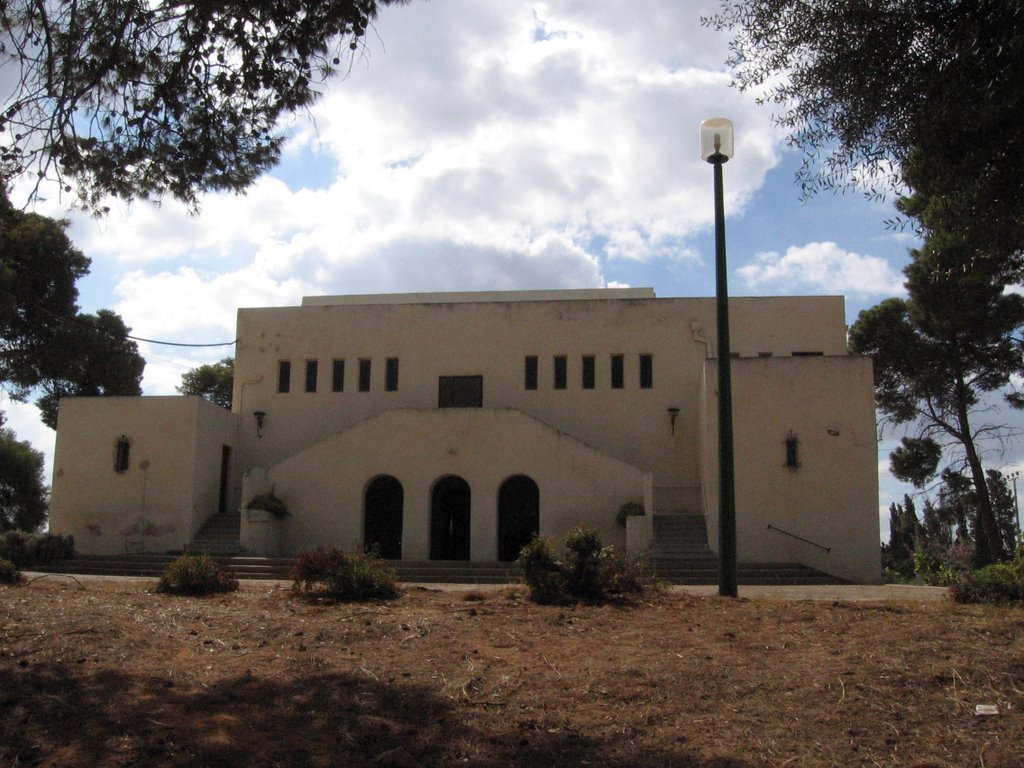
Here is the synagogue. Soon, on the evening of Yom Kippur, it will be filled to capacity. Gmar Chatima Tova.


Wednesday, September 27, 2006


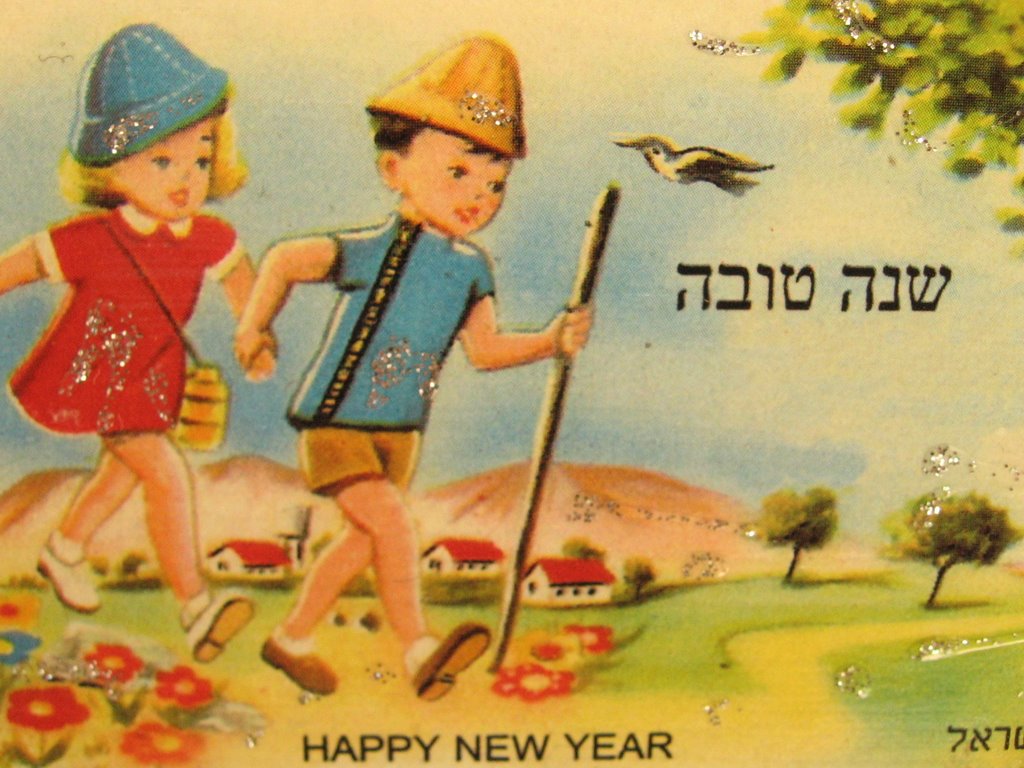
2 "Happy New Year" greetings of long ago

Once upon a time, before singing New Year's cards with moving parts popped up on computers, before text messages and songs were transmitted to our mobile phones, and even the telephone was a rarity – hand written mail would come to every town (a children's song tells about the red mail van arriving today) and connect us to the rest of the world. People wrote letters with pens, and when the holiday arrived everyone sent "Happy New Year" greetings. The city streets teemed with stalls selling thousands of greeting cards sprinkled with gold and silver, with pictures of children or soldiers, with tanks or flowers.
These greeting cards were characterized primarily by naivety, hope and a fervent wish that the new state would be a new beginning and would overcome memories of the past. Here we see children walking in the fields hand in hand. Their figures are disproportional large and it seems as if they are floating. The simple houses and the water tower indicate the new settlement. All around it are green areas and bare hills that are awaiting "Keren Kayemet L'Israel" forestation projects. There are no others to share the land with and no sign of an old village. This is a picture of national rebirth on virgin soil – the essence of the image of an empty country absorbing gladly the children of the dream, its redeemers.
The picture exudes innocence and hope. This is a "Happy New Year" of harmony with friendly nature, of faith in the children's future and the hope that the children (to whom the staff has been passed) will create a new world – the young state of Israel.

Tuesday, September 19, 2006


1 Introduction - the most beautiful scenery

My personal column, to which these words are the introduction, will appear weekly, consisting of a photograph taken with my cell phone camera and a few reflections on various aspects of daily life. My modest goal is to document things we constantly see but rarely give them a thought. The little camera, present always, will be an aid in observing discreetly the commonplace and revealing it in a new light.
At least two days a week, during the warm summer months, I walk along the beach at sunset. Our sunsets as seen from the beach of Sdot Yam revealing the sun sinking into the sea, are the most beautiful. At the end of his book "The Little Prince", Antoine de Saint Exupéry drew scenery of two lines (and a star), and declared it to be the most beautiful scenery in the world. For me the most beautiful sight is the sunset in the sea. I have seen hundreds and I will never get enough of them.